Table of Contents
- The Rise of Conversational Marketing in India
- Types of Chatbots: Choosing the Right Solution
- WhatsApp Business Chatbots: India's Game Changer
- AI-Powered Conversations: Beyond Rule-Based Bots
- Implementation Guide: Building Your First Chatbot
- Indian Customer Preferences and Chat Behavior
- Multilingual Chatbots for India's Diversity
- ROI Data: What Indian Businesses Are Seeing
- Best Platforms for Chatbot Development in India
- Future of Conversational Marketing in India
1. The Rise of Conversational Marketing in India
India's relationship with messaging is fundamentally different from the rest of the world. With WhatsApp penetration at 95% among internet users, the country has become the world's largest conversational commerce market. In 2026, an estimated 68% of Indian consumers prefer messaging a business over calling or emailing — a shift that has created extraordinary opportunities for businesses willing to embrace conversational marketing.
Conversational marketing is the practice of engaging prospects and customers through real-time, personalized conversations across messaging channels. Unlike traditional marketing that pushes messages at audiences, conversational marketing creates a two-way dialogue that builds relationships, qualifies leads, and drives conversions — all while providing the instant response that modern consumers demand.
• 550+ million WhatsApp users in India
• 68% of consumers prefer messaging businesses over calling
• Average response time expectation: under 5 minutes
• Businesses using chatbots see 55% increase in lead generation
• WhatsApp Business messages have 98% open rates
• Conversational marketing reduces customer acquisition cost by 30-40%
For businesses in cities like Ujjain and Indore, conversational marketing represents a level playing field. A small business with a well-implemented WhatsApp chatbot can provide the same quality of instant, personalized response as a large corporation — and often better, because smaller businesses can infuse their bots with authentic personality and local knowledge that resonates with customers.
2. Types of Chatbots: Choosing the Right Solution
Not all chatbots are created equal. Understanding the different types of chatbots available in 2026 is essential for choosing the right solution for your business needs, budget, and technical capabilities.
Rule-Based (Decision Tree) Chatbots
Rule-based chatbots follow predefined conversation paths. When a user selects an option or types a keyword, the bot follows a predetermined branch of logic to deliver the appropriate response. These are the simplest and most affordable chatbots to build, making them ideal for small businesses in Ujjain and Indore that need basic automation without complex AI infrastructure.
Rule-based bots excel at handling frequently asked questions, collecting basic information (name, email, phone number), guiding users through simple processes (booking appointments, checking order status), and routing conversations to human agents when needed. Their limitation is rigidity — if a user asks something outside the predefined paths, the bot cannot respond intelligently.
AI-Powered Chatbots (NLP/NLU)
AI-powered chatbots use Natural Language Processing (NLP) and Natural Language Understanding (NLU) to interpret user intent, even when the user's language does not match predefined keywords. These bots learn from every conversation, improving their responses over time. In 2026, AI chatbots have become remarkably sophisticated, capable of handling complex conversations that would have been impossible just two years ago.
For Indian businesses, AI chatbots offer the significant advantage of handling code-switching — the common Indian practice of mixing languages within a single message. A user might type "Mujhe pricing ke baare mein jaanna hai" (Hinglish for "I want to know about pricing"), and an AI chatbot trained on Indian language patterns can understand and respond appropriately.
Hybrid Chatbots
Hybrid chatbots combine rule-based flows for common scenarios with AI fallback for unexpected inputs. This approach provides the reliability of rule-based systems with the flexibility of AI. Most enterprise-grade chatbot solutions in 2026 use this hybrid approach, and it is the model we recommend for businesses that need both consistency and adaptability.
3. WhatsApp Business Chatbots: India's Game Changer
WhatsApp is not just a messaging app in India — it is the internet for hundreds of millions of people. The WhatsApp Business API has transformed the platform into a full-fledged business channel, and chatbots built on WhatsApp are delivering results that no other channel can match in the Indian market.
Why WhatsApp Chatbots Dominate in India
The answer is simple: meet your customers where they already are. Indian consumers do not want to download a new app, create an account on your website, or learn a new interface. They want to message you on WhatsApp because that is what they do all day, every day, with everyone in their lives. A WhatsApp chatbot removes every friction point between your customer and your business.
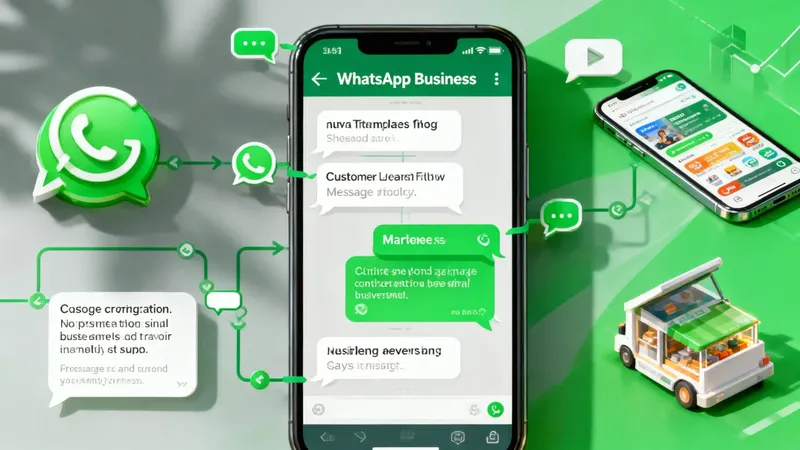
WhatsApp Business API features that make chatbots particularly powerful include: automated greeting messages, quick reply buttons and interactive lists, catalog browsing within chat, payment integration through UPI, location sharing for local businesses, document sharing for quotes and proposals, and seamless handoff to human agents.
WhatsApp Chatbot Use Cases for Indian Businesses
E-commerce: Product browsing, order placement, tracking updates, return processing, and personalized recommendations — all within WhatsApp. Indian D2C brands are seeing 40% higher conversion rates through WhatsApp commerce compared to traditional websites.
Healthcare: Appointment booking, prescription reminders, lab report delivery, and basic symptom triage. Clinics in Indore using WhatsApp chatbots report 60% fewer missed appointments and 35% reduction in administrative overhead.
Real Estate: Property inquiry handling, virtual tour scheduling, document collection, and lead qualification. Real estate agents in Ujjain using WhatsApp bots are qualifying leads 5x faster than manual processes.
Education: Course information delivery, enrollment assistance, fee payment reminders, and study material distribution. Coaching institutes across Madhya Pradesh have automated 80% of their student communication through WhatsApp chatbots.
"We implemented a WhatsApp chatbot for a local restaurant in Ujjain that handles table reservations, menu inquiries, and delivery orders. Within the first month, it processed over 2,000 conversations and freed up 30+ hours of staff time. The ROI was evident within the first week."
— iMars Vision Labs Automation Team
4. AI-Powered Conversations: Beyond Rule-Based Bots
The AI chatbot landscape in 2026 has been transformed by large language models (LLMs) and generative AI. These technologies enable chatbots that can hold natural, context-aware conversations that feel remarkably human. For Indian businesses, this means chatbots that can handle complex queries, provide personalized recommendations, and even negotiate prices — tasks that were previously impossible to automate.
What Modern AI Chatbots Can Do
Today's AI chatbots can understand context across multiple messages, remember previous interactions with the same customer, handle multiple languages and code-switching within a conversation, detect sentiment and adjust tone accordingly, provide product recommendations based on conversation context, process transactions and bookings, and escalate to human agents with full conversation context when needed.
For a digital marketing agency in Indore, an AI chatbot could greet a website visitor, understand that they are looking for SEO services, ask qualifying questions about their business size and goals, provide relevant case studies, share pricing ranges, and book a consultation call — all in a natural conversation that feels personal, not robotic.
Building AI Chatbots for Indian Languages
One of the most exciting developments in 2026 is the improvement of AI chatbot capabilities in Indian languages. Models now handle Hindi, Tamil, Telugu, Marathi, Gujarati, and other Indian languages with increasing fluency. For businesses in Madhya Pradesh, this means you can deploy chatbots that converse in Hindi with customers who prefer it, while seamlessly switching to English for others.
5. Implementation Guide: Building Your First Chatbot
Implementing a chatbot for your business does not require a large technical team or massive budget. Here is a step-by-step guide to getting your first chatbot up and running, whether you are a small business in Ujjain or a growing company in Indore.
Step 1: Map Your Conversation Flows
Before choosing a platform or writing a single line of code, map out the conversations your chatbot needs to handle. List the top 20 questions your customers ask, the actions they want to take, and the information they need. Group these into conversation flows — for example, a "pricing inquiry" flow, a "service booking" flow, and a "support request" flow.
For each flow, define the entry point, the key decision points, the information you need to collect, the response at each step, and the exit point (conversion, handoff, or resolution). This mapping exercise is the foundation of a successful chatbot and takes 2-4 hours for most small businesses.
Step 2: Choose Your Platform
Select a chatbot platform based on your needs, budget, and technical capability. For most Indian small businesses, we recommend starting with WhatsApp Business API through a platform like Interakt, Wati, or AiSensy. These platforms provide no-code chatbot builders specifically designed for the Indian market, with Hindi language support, UPI payment integration, and affordable pricing starting at ₹999-2,499 per month.
Step 3: Build and Test
Build your conversation flows using the platform's visual builder. Most modern chatbot platforms use drag-and-drop interfaces that require no coding knowledge. Test every flow thoroughly — send messages as a customer would, test edge cases, and ensure the handoff to human agents works smoothly.
Step 4: Launch and Monitor
Launch your chatbot with a soft rollout — perhaps only on your website initially or to a subset of your WhatsApp contacts. Monitor conversations daily for the first two weeks, identifying questions the bot cannot answer and adding new responses. After the initial refinement period, expand to all channels and promote your chatbot through your social media, email, and in-store signage.
6. Indian Customer Preferences and Chat Behavior
Indian consumers have distinct preferences when it comes to conversational interactions with businesses. Understanding these preferences is critical for designing chatbot experiences that feel natural and helpful rather than frustrating.
The Expectation of Instant Response
Indian consumers are accustomed to near-instant responses on messaging platforms. When they message a business on WhatsApp, they expect a reply within minutes — not hours. This is where chatbots provide the most immediate value: they respond instantly, 24/7, eliminating the frustrating wait that drives potential customers to competitors.
Our data from managing chatbot implementations across 50+ Indian businesses shows that response time is the single most important factor in customer satisfaction with conversational marketing. Chatbots that respond within 10 seconds achieve 85% conversation completion rates, while those with 30-second delays drop to 60%.
Trust and Personalization
Indian consumers are increasingly wary of spam and impersonal automated messages. Your chatbot must feel like a helpful assistant, not a marketing machine. Personalize conversations by using the customer's name, referencing previous interactions, and providing relevant rather than generic responses. Avoid aggressive sales language — Indian consumers respond better to helpful, consultative conversations.
The Human Handoff
Indian consumers want to know they can reach a real person when needed. Always provide a clear path to human assistance. Phrases like "Let me connect you with our team" or "I'll have a specialist reach out to you" build confidence that there are real humans behind the bot. Businesses that hide the option to speak with a person see significantly lower chatbot satisfaction scores.
7. Multilingual Chatbots for India's Diversity
India has 22 officially recognized languages and hundreds of dialects. A chatbot that only communicates in English excludes the majority of potential customers. In 2026, multilingual chatbot capability is not a nice-to-have — it is essential for any business serious about conversational marketing in India.
Language Detection and Switching
Modern chatbot platforms can automatically detect the language a user is writing in and respond in the same language. This creates a seamless experience for users who might switch between Hindi and English within the same conversation. The key is training your chatbot on Indian language patterns, including Hinglish (the blend of Hindi and English that dominates informal Indian communication).
Prioritizing Languages by Market
For businesses in Madhya Pradesh, prioritize Hindi as your primary chatbot language, with English as a secondary option. If you serve customers across India, add Marathi, Gujarati, Tamil, and Telugu based on where your customers are located. Start with the languages your existing customers use most, and expand based on demand.
For businesses targeting international markets from India, English remains the primary language, but consider adding Arabic for UAE clients, Spanish for Latin American prospects, or French for African markets. Multilingual capability is a competitive differentiator that signals professionalism and global readiness.
8. ROI Data: What Indian Businesses Are Seeing
The return on investment from chatbot implementation in India is compelling. Here is what businesses across different sectors are experiencing in 2026, based on data from implementations we have managed and monitored.
• Lead generation increase: 45-65%
• Response time reduction: 90%+ (from hours to seconds)
• Customer support cost reduction: 30-50%
• Lead qualification speed: 5x faster than manual process
• Appointment booking rate: 35% improvement
• Customer satisfaction scores: 20-30% increase
• Average payback period: 2-4 months
Case Study: Real Estate Company in Indore
A mid-size real estate developer in Indore implemented a WhatsApp chatbot to handle property inquiries. Before the chatbot, their sales team spent 60% of their time on initial inquiries that often led nowhere. After implementation, the chatbot qualifies leads by asking about budget, preferred location, property type, and timeline. Only qualified leads are passed to the sales team. Result: the team's conversion rate doubled, and they closed 40% more deals without adding staff.
Case Study: E-commerce Brand
A D2C fashion brand based in Ujjain deployed a chatbot for order tracking, returns, and product recommendations on WhatsApp. The chatbot handles 75% of customer queries without human intervention. Customer satisfaction increased from 3.2 to 4.5 out of 5, and repeat purchase rates grew by 28% because the chatbot proactively sends personalized recommendations based on purchase history.
9. Best Platforms for Chatbot Development in India
The chatbot platform landscape in India has matured significantly. Here are the top platforms we recommend for Indian businesses in 2026, categorized by business size and needs.
For Small Businesses (Under ₹5,000/month)
Interakt: Affordable WhatsApp Business solution with built-in chatbot builder. Excellent for small retailers, restaurants, and service businesses. Hindi language support and UPI payment integration come standard.
AiSensy: Feature-rich WhatsApp marketing platform with chatbot capabilities. Strong automation workflows and broadcast messaging. Good for businesses that need both chatbot and marketing automation in one platform.
For Growing Businesses (₹5,000-25,000/month)
Wati: Comprehensive WhatsApp Business platform with advanced chatbot builder, team inbox, and CRM integration. Suitable for businesses with multiple team members managing customer conversations.
Gallabox: No-code chatbot platform with strong AI capabilities and Indian language support. Good for businesses that need more sophisticated conversation flows and CRM integration.
For Enterprise (₹25,000+/month)
Haptik (Jio Haptik): India's leading conversational AI platform with deep NLP capabilities, multilingual support, and enterprise-grade security. Used by major Indian brands across banking, telecom, and e-commerce.
Yellow.ai: Enterprise-grade AI chatbot platform with omnichannel support, advanced analytics, and custom AI model training. Ideal for large businesses with complex conversation requirements.
"Choosing the right chatbot platform depends on your specific needs, budget, and growth plans. We help businesses in Ujjain and Indore evaluate options and implement the solution that delivers the best ROI for their situation. The most expensive option is not always the best — the right fit matters more."
— iMars Vision Labs Digital Strategy Team
10. Future of Conversational Marketing in India
The conversational marketing landscape in India is evolving rapidly. Here are the trends that will shape the next 12-24 months and beyond:
Voice-Based Chatbots
Voice interactions are the next frontier. With voice search growing 40% year-over-year in India, chatbots that can process and respond to voice messages on WhatsApp will become standard. This is particularly important for users in tier-2 and tier-3 cities who prefer voice over text input.
Video Chatbots
Imagine a chatbot that responds to a customer query with a personalized video. This technology is already emerging, with businesses creating short video responses that play within the chat interface. For real estate, education, and hospitality businesses in Indore and Ujjain, video chatbots could be transformative.
Predictive Conversations
AI chatbots are becoming proactive rather than reactive. Instead of waiting for customers to initiate conversations, chatbots will reach out at the right moment — when a customer abandons their cart, when a subscription is about to expire, or when a new product matches their preferences. This proactive approach is already showing 3-5x higher engagement rates than reactive chatbots.
Conversational marketing through chatbots is not a future trend for Indian businesses — it is a present reality delivering measurable results today. Whether you run a small shop in Ujjain, a growing agency in Indore, or a startup targeting customers across India, chatbots offer a way to provide instant, personalized, 24/7 customer engagement at a fraction of the cost of traditional customer service. The businesses that implement these systems in 2026 will build lasting competitive advantages in customer experience, operational efficiency, and lead generation.